Zitat von
carstenm

Offen gesagt, hat mir das Üben sehr, sehr häufig ganz und gar keinen Spaß gemacht ... ich habe es häufig und über viele Jahre eher als Arbeit empfunden ...
Daraus schließe ich jetzt, dass Du Arbeit und Spaß als Gegensätze ansiehst.
Da gibt es auch andere Meinungen:
Ich schlief und träumte, das Leben sei Freude.
Ich erwachte und sah, das Leben war Pflicht.
Ich handelte, und siehe, die Pflicht war Freude.
Rabindranath Tagore
Don’t Do Anything That Isn’t Play
By Marshall Rosenburg
(excerpted from his book Non Violent Communication)
Wenn ich rate: "Tun Sie nichts, was kein Spiel ist!", halten mich manche für radikal. Doch ich glaube ernsthaft, dass eine wichtige Form des Selbstmitgefühls darin besteht, Entscheidungen zu treffen, die rein durch unseren Wunsch motiviert sind, etwas zum Leben beizutragen, und nicht aus Angst, Schuld, Scham, Pflicht oder Verpflichtung. Wenn wir uns des lebensbereichernden Zwecks bewusst sind, der hinter einer Handlung steht, die wir ausführen, dann hat selbst harte Arbeit ein spielerisches Element in sich. Im Gegensatz dazu wird eine ansonsten freudvolle Tätigkeit, die aus Pflicht, Schuld, Scham oder Furcht ausgeführt wird, ihre Freude verlieren und schließlich Widerstand hervorrufen.
Vor vielen Jahren begann ich, mich mit einer Tätigkeit zu beschäftigen, die den Pool an Freude und Glück, der meinem Leben zur Verfügung steht, erheblich vergrößerte und gleichzeitig Depressionen, Schuldgefühle und Scham verminderte. Ich biete sie hier als einen möglichen Weg an, unser Mitgefühl für uns selbst zu vertiefen, um uns zu helfen, unser Leben aus einem freudigen Spiel heraus zu leben, indem wir in einem klaren Gewahrsein der lebensbereichernden Notwendigkeit hinter allem, was wir tun, geerdet bleiben.
https://nichingspiral.com/articles/rosenburg/
Übersetzt mit www.DeepL.com/Translator (kostenlose Version)
Zitat von
carstenm
wirklich "Spaß" ist erst in den letzten Jahren hinzu gekommen.
Was ist passiert?
Nach der Hütherhypothese hättest Du dann in den Jahrzehnten davor nicht viel gelernt, weil der "Dünger" für's Gehirn gefehlt hat.
Zitat von
carstenm
Was hat das mit dem Üben einer traditionellen japansichen Kunst zu tun?
Ich meine das nicht ironisch oder um drei Ecken gedacht: Ich verstehe nicht, was welche moderne Lerntheorie auch immer mit dem Üben einer traditionellen japanischen Kunst zu tun haben könnte? Ein wesentlicher Aspekt ist doch gerade, daß die traditionelle Didaktik japanischer Künste eine vollkommen andere ist?
Wenn eine Lerntheorie die Grundlagen menschlichen Lernens korrekt beschreibt, dann ist naheliegend, dass die auch für Japaner von vor hundert Jahren zutrifft.
Im Bereich der CMA wird über die Söhne des Yang-Stil-TJQ-Gründers berichtet:
Luchan trainierte seine Söhne, Banhou und Jianhou, von klein auf intensiv. Seine Kampfkunst wurde zum Familienunternehmen, und dieser Druck war für die beiden Jungen sehr schwierig. Die Familienüberlieferung berichtet, dass Banhou versuchte, von zu Hause wegzulaufen, und Jianhou unternahm einen Selbstmordversuch
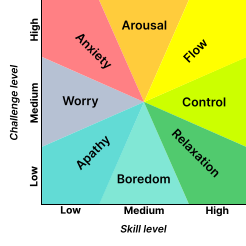
klingt nach Überforderung in dem von Aiki50+ verlinkten Diagramm.
Allerdings haben die die Hütherhypothese angeblich widerlegt:
So schwierig ihre Ausbildung auch war, beide nahmen schließlich die Kunst ihres Vaters an und wurden bekannte Praktiker.
Ich schätze aber mal, der Frau ohne Hakama im Eingangsvideo hat das Üben mit den älteren Herrn durchaus Freude bereitet.



 Mit Zitat antworten